Membership Required: The Cover Charge on American Belonging
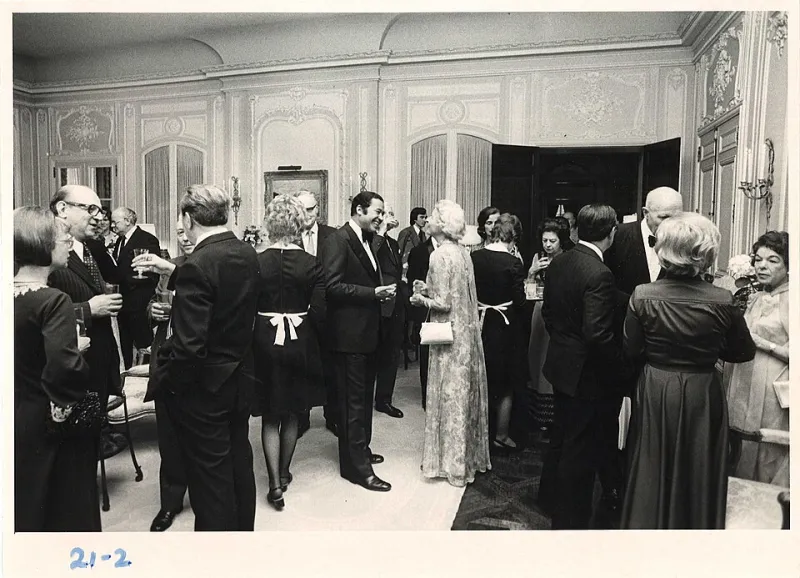
Photo: Carl Albert Research and Studies Center, Congressional Collection, CC BY-SA 4.0, via Wikimedia Commons
There's a specific kind of loneliness that doesn't look like loneliness. It looks like a calendar full of plans. A run club that meets Tuesdays and Saturdays. A supper club with a waitlist. A social club whose annual fee costs more than your first month's rent. You're not isolated — you're enrolled.
Ray Oldenburg, the sociologist who coined the term "third place," meant something simple: the spaces that aren't home and aren't work, where people gather without an agenda. The diner counter. The barbershop. The mall in 1994, back when it smelled like Cinnabon and possibility. These places worked because they were cheap, unstructured, and — crucially — you could loiter. Nobody asked what you did for a living before letting you sit down.
We've been watching those spaces close for decades, and we've mostly shrugged. But here's the part nobody wants to say out loud: they aren't just disappearing. They're being replaced — by versions of themselves that require a credit card.
The Loitering Tax
Look around and the pattern is everywhere. Third-wave coffee shops where the Wi-Fi password comes with an unspoken two-drink minimum. Coworking cafés that charge $30 a month just to exist near other humans. Run clubs — run clubs! — with membership tiers, branded singlets, and waitlists longer than the actual route. Soho House built an empire on the premise that the thing Americans are most desperate for is a room full of people who also paid to be in the room.
And honestly? The desperation is real. Americans spend fewer hours socializing in person than at any point in modern record-keeping. Church attendance is down. The mall is a mausoleum with a food court. Half the independent bars that survived the pandemic got bought, renovated, and turned into a concept. When the free options rot, people don't stop needing them. They pay.
There's a reason the paid versions work so well. A $200-a-year social club does something the neighborhood bar never could: it guarantees everyone there opted in. No awkwardness, no dead air, no wondering if that person at the corner table wants to talk. You paid, they paid, the transaction pre-warmed every interaction. It's community with the friction removed — and, some argue, the soul removed with it.
What a Cover Charge Buys You (and What It Doesn't)
Here's the uncomfortable trade. Oldenburg's third places were defined by who showed up — the regulars, the weirdos, the retired guy who's been at the same stool since the Nixon administration. Paid spaces are defined by who can show up, which is a much shorter list. The $35 run club in Brooklyn and the free one in the park two neighborhoods over are not serving the same community, no matter how similar the Instagram posts look.
There's also the matter of what sociologists call "weak ties" — the casual, low-stakes connections with people unlike you that free public spaces used to manufacture constantly. A membership club curates your ties. Same industry, same tax bracket, same podcast recommendations. It's belonging, but the kind you could get from a very good group chat.
None of this makes the people joining clubs villains. They're solving a real problem with the tools available. When the public bench is gone, you buy a chair.
The Free-Radicals Fighting Back
Which is why the most interesting story in American community right now isn't the clubs. It's the people refusing the model.
In Los Angeles, there's a laundromat that hosts free comedy nights between the dryers. In Chicago, community fridges have quietly evolved into neighborhood bulletin boards and mutual-aid hubs. Across the country, libraries — the last genuinely free third place standing — are reinventing themselves as tool-lending, record-borrowing, event-hosting civic living rooms, often against the wishes of the people defunding them. And in a thousand towns, someone's opening a bar that's also a bookstore that's also a venue, running on margins so thin it's basically a public service with a liquor license.
These spaces share a philosophy: community shouldn't require a membership card, because the moment it does, it stops being community and starts being a service. You can cancel a service. You can outgrow one. You can't do either with a neighborhood.
The question for the rest of us is whether we're willing to be inconvenienced for that. Free third places ask something of you — tolerance for strangers, patience with chaos, showing up without a guaranteed good time. The paid version asks only for your card number. It's the easier offer. It always is.
But the next time you're about to renew that membership, ask yourself what you're actually paying for. Not the space. Not the programming. You're paying to skip the hard part — the part where belonging is something you build with people you didn't choose, in rooms nobody owns.
The third place didn't leave the building. We sold the building. The question is whether we want it back.